
.png)
Why this story matters
We usually see stories of people who quit with a plan, but Vic didn't have one when she walked away from accounting. She had 70 half-baked career ideas, six months of savings, and a partner who'd just retrained as a software engineer. The day he passed probation, she walked into work and quit with no next role and no clients lined up.
Five days later, she had her first client.
She didn't plan her way there. She just kept talking to people about what she was exploring, and someone connected her to work. People like to call this luck, but really she just showed up and told the truth about not having it figured out yet.
Where she started
Vic had spent her entire life becoming an accountant. By her early 30s, she was a finance business partner at a UK charity. She knew how to answer when people asked what she did.
She felt nothing about it though, everything was just "good."
But she couldn't leave yet because her partner had just been laid off and bills were piling up, so she stayed put. Then her partner did something unexpected: he retrained as a software engineer in a completely different field, starting from scratch. She watched him pass probation at his new job, and that day—literally that day—she quit.
What she tried first
She didn't jump straight to freelancing though. For two years, she stayed in her stable role while working through the Careershifters Launch Pad program, generating 70 possible career ideas and testing a few through unpaid work. She'd look at job boards occasionally, but nothing fit the version of herself she was becoming.
The breakthrough wasn't finding the right posting, it was realizing her next career wouldn't come from a posting at all.
She saved six months of mortgage payments and watched her partner's transformation give her permission to try the same thing. If he could start over, so could she. She left with no next role lined up, just a vague idea that she could freelance as a "strategic facilitator"—which is a fancy way of saying "I help organizations not be a mess."
How she got her first real client
She didn't apply for anything.
Five days after quitting, she had a client, and here's how it happened:
She'd been volunteering at a charity when a former colleague showed up for a building tour. They grabbed drinks after, and Vic talked about the stuff she'd been exploring since quitting—no sales pitch, just a friendly conversation about what she was trying to figure out.
The next day: "Hey, I told my husband about what you're doing. He volunteers with a charity that needs exactly that. Want to meet them tomorrow?"
She went to dinner, and by the end of it, she had her first gig doing strategic planning for a small charity. That was it, no sales pitch. Just one honest conversation and a weak tie doing the work.
She hit her first-year income target in six months, which was less than her old salary but enough to live on after adjusting spending.
What the work actually looks like
She works with multiple small-to-mid-sized charities, and the work changes constantly: strategic planning one week, programme management the next, then evaluation, coaching, whatever the client needs that doesn't require a specialist. Her main client calls her their "Jill of All Trades" because if something needs doing and no one on the team has it as a core skill, it lands on her desk.
Everything is project-based with no retainers, no proposals, no tenders. Every client for the past five years has come through word of mouth - someone she worked with before, or someone who heard about her from someone else. Zero cold outreach, and she's never marketed herself or built a personal brand.
She's always learning something new, and she still doesn't know how to describe what she does when people ask. The answer changes depending on the week.
The tradeoffs
What she gave up:
The credibility of being "an accountant," the structure of Monday to Friday 9 to 5, being part of a stable team, and having a clear answer to "what do you do?"
What she gained:
Work she believes in with organizations whose missions actually matter, constant variety, the ability to say no (though she's still learning this), and income that's meaningful even if it's lower.
What became uncertain:
Professional identity—she genuinely doesn't know how to describe what she does. Long-term trajectory, because there's no ladder and no obvious next step.
The number that matters
She hit her first-year income target within six months of leaving her stable role.
What's easy to miss
The hardest part wasn't learning new skills, it was going from "I'm an accountant" to "I'm exploring." That's the gap most people can't think of, but comes with any big life changes on how we think about work.
The open exploration became what made her different though, because people could see she was genuinely excited about what she was testing, and that translated into trust faster than any portfolio could have.
Your network doesn't need to understand your plan, they just need to see you excited about something real.
There's this concept called "the strength of weak ties" where your acquaintances are often more valuable than your close friends when it comes to opportunities.
Why? Because your close friends know the same people you do, you're basically all in the same bubble. But that random former colleague you barely keep in touch with? She's connected to completely different networks.
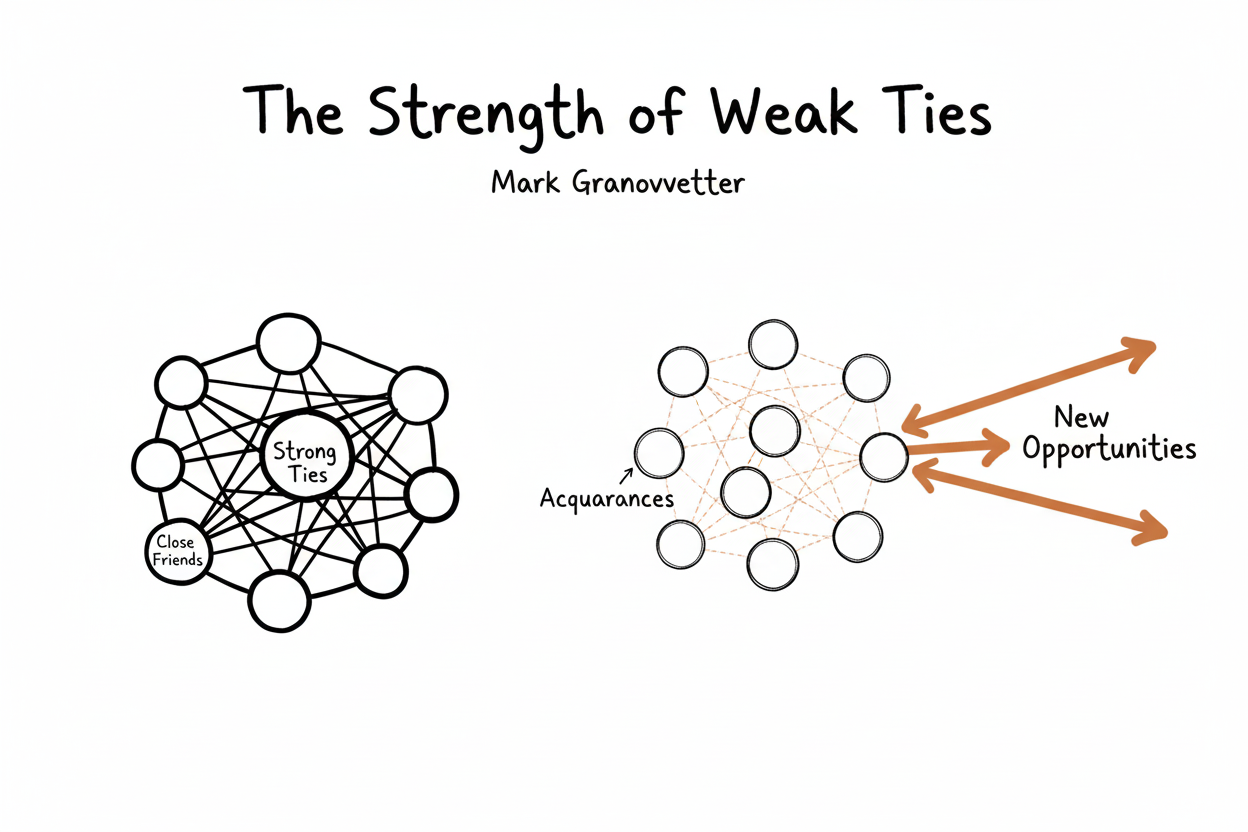
Vic's first client didn't come from a close friend, it came from a former colleague she ran into at a volunteer thing, and that colleague's husband volunteered with a charity she would never have heard about otherwise.
Buildzone takeaway
Vic spent two years trying to figure out what came next while keeping her accounting job. She generated 70 ideas, tested a few, saved six months of expenses, and then quit the day her partner passed probation at his new job.
She didn't apply to any open potions as her first client came from drinks with a former colleague five days after she left. Every client since has come the same way by real work of mouth from someone she worked with, or someone who heard about her from someone else.
Here's the thing though: Vic says she's never worked on her personal branding. No LinkedIn strategy, no website, nothing. But actually, her brand is incredibly clear: she only works with organizations whose missions she believes in. That's the whole thing. And somehow that non-strategy has been translated strong enough to her clients and kept her booked for five years straight.
At a Glance
- Name: Vic, early 30s
- Career before: Finance business partner at a UK charity
- What she built: Freelance generalist practice (strategic planning, programme management, evaluation, coaching)
- Revenue model: Project-based work across multiple clients
- Clients: Small-to-mid-sized charities and mission-driven organizations
- Team size: Solo
- Tools used: Word of mouth only
- What didn't work: Job boards and trying to specialize her freelance work
- Transition timeline: Two years exploring through Careershifters Launch Pad, then left stable role. Hit first-year income target within six months.

.png)
.png)